A simple, step-by-step guide for setting up your curtain wire at home, and keeping it working smoothly for years to come.
What Is a Curtain Wire?
A curtain wire is a thin, strong metal wire (usually stainless steel) that stretches tightly between two points on a wall or ceiling. Your curtain hangs from rings or hooks that slide along the wire, so you can open and close it smoothly — without a bulky rail.
It’s a popular choice because it’s neat, nearly invisible, and works well for wide windows, room dividers, or open spaces where a regular curtain rod doesn’t fit well.
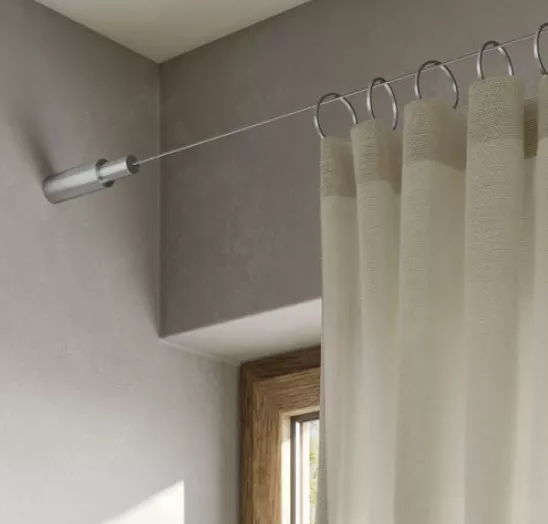
curtain wire
What You’ll Need
- A tape measure and a spirit level
- A drill and wall anchors (choose anchors strong enough for your wall type)
- Two end hooks or brackets
- Wire cable (the right thickness for your curtain — see below)
- A turnbuckle (the small part that lets you tighten the wire)
- Cable clips or clamps
- Wire cutters
- Curtain rings or hooks
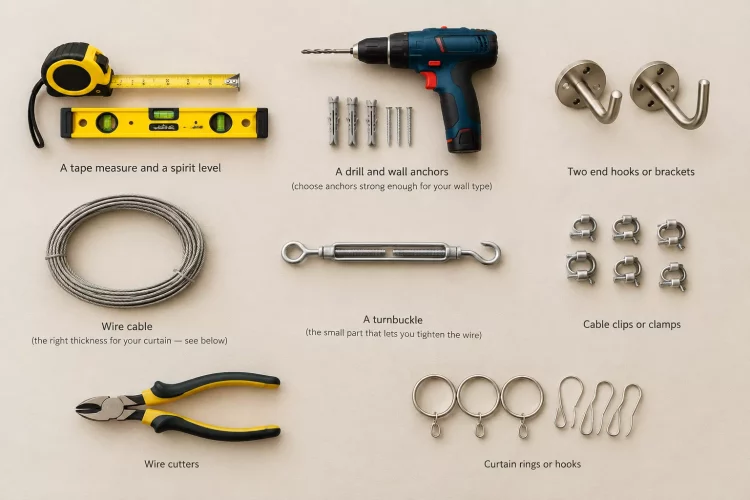
installation tools
Installing Your Curtain Wire
- Decide where the wire will go. Measure the full length, and check for anything in the way.
- Find a strong spot to drill into — ideally a wooden stud or solid wall, not just plasterboard. This keeps your hooks from pulling loose later.
- Fit both end hooks at exactly the same height. Use your level to check — even a small tilt will be easy to see once the curtain is hanging.
- If your window or space is wide (more than about 3 metres), add one extra support hook in the middle. This stops the wire sagging under the curtain’s weight.
- Slide your curtain rings onto the wire, then attach one end of the wire firmly to its hook.
- Pull the wire tight by hand, thread it through the turnbuckle, and attach it to the other hook.
- Turn the turnbuckle slowly to tighten the wire. It should feel firm and straight — not loose, but not overly tight either.
- Trim off any extra wire so nothing is left hanging loose.
- Before hanging your final curtain, hang something of similar weight for a few hours as a test. This helps you catch any looseness early.
- Hang your curtain, then do one last check of the tension and adjust if needed.
HELPFUL TIP
Hang temporary weights equivalent to the curtain’s approximate weight and leave the system tensioned for a few hours. This surfaces any weak anchor, under-tensioned run, or bracket movement before the actual curtain goes up.

extra support to stop wire sagging
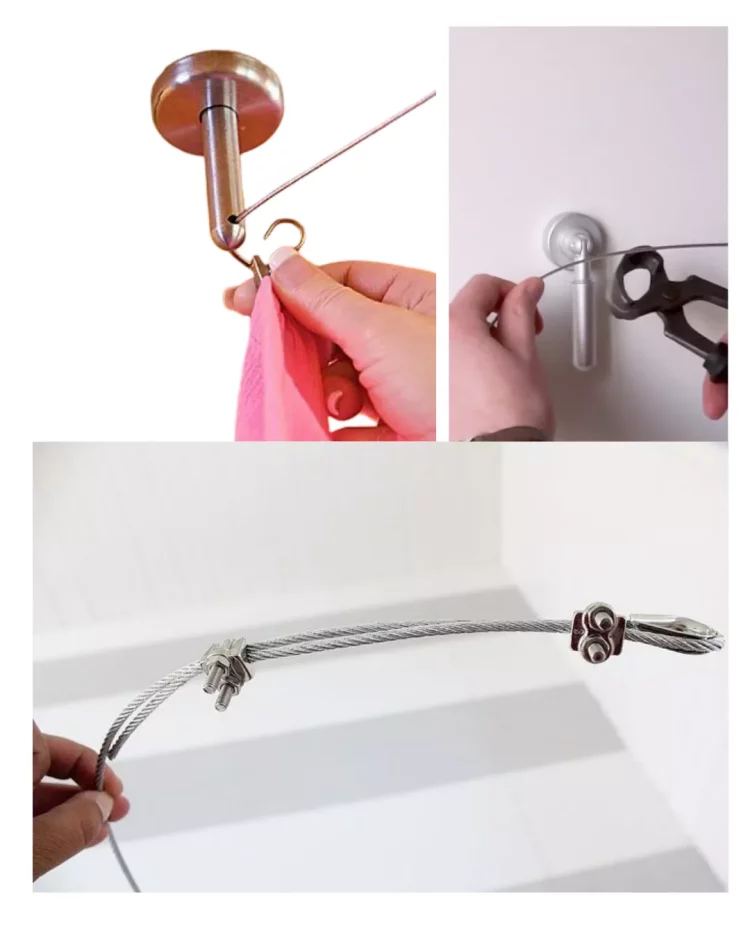
wire installation
Choosing the Right Wire Thickness
As a simple rule of thumb:
Curtain Type
Suggested Wire Thickness
Light, sheer curtains
Thin (about 1.5 mm)
Everyday curtains
Medium (about 2 mm)
Heavy or blackout curtains
Thick (3 mm or more)
If you’re not sure, ask your supplier — they can recommend the right wire for your exact curtain weight and window size.
Do’s and Don’ts
- Do keep the wire firm and straight, not overly tight.
- Do add a middle support on long spans.
- Do drill into a solid wall or stud, not just plasterboard.
- Don’t over-tighten the turnbuckle — this can bend your brackets or pull them out of the wall.
- Don’t leave the wire loose — it will sag and your curtain will drag.
- Don’t use an indoor-only wire outdoors — choose stainless steel for outdoor or damp spaces.
Caring for Your Curtain Wire
Every 6–12 months
Check the tension. If the wire feels a little loose, simply tighten the turnbuckle a small amount.
Cleaning
A soft, damp cloth is all you need. Avoid rough scrubbing pads or strong cleaning chemicals — they can scratch the surface and lead to rust over time.
In damp or outdoor spaces
Wipe the wire down regularly and consider a light coat of corrosion-protecting spray or oil, especially near the coast or in humid climates.
Quick check-up
- Is the wire free of fraying or rust?
- Do the rings slide smoothly?
- Are the hooks and wall anchors still firm?
- Is the wire free of kinks or sharp bends?
WHEN TO REPLACE THE WIRE
If you notice rust, a kink, fraying strands, or the wire looking thinner in places, it’s time to replace it rather than just re-tightening. This usually means the wire is worn out on the inside, not just the surface.
Common Problems and Quick Fixes
Problem
Likely Cause
What To Do
Curtain sags in the middle
Wire too loose, or no middle support on a long run
Tighten the turnbuckle; add a middle support hook
Rings feel stiff or squeaky
Dust build-up, or needs a little lubrication
Wipe clean and add a small amount of dry lubricant
Rust spots appear
Wrong wire type for a damp area
Switch to stainless steel wire; wipe and protect regularly
Hook is pulling away from the wall
Not drilled into a solid support, or wire too tight
Refit into a stud or solid wall; ease off the tension a little
Frequently Asked Questions
How often should I check the tension?
Once or twice a year for most homes. If your curtain is somewhere very humid or gets a lot of daily use, check it a little more often.
Can I use this outside?
Yes — just choose a stainless steel wire made for outdoor or damp conditions, and clean it more regularly.
What if I’m not confident drilling into my wall?
That’s completely understandable — this is a great job to hand to a handyman or the supplier’s installation team, especially for heavy curtains or brick/concrete walls.
Will the wire stretch over time?
A small amount of stretch is normal in the first few weeks as everything settles in — this is why a first re-tightening shortly after installing is a good idea. If it keeps stretching after that, the wire may be too thin for your curtain’s weight.