THE DEFINITIVE GUIDE
From tension rods in a rented studio to motorized tracks in a smart home — curtain rods are more varied (and more design-forward) than most people realize. Here’s how to navigate them.
01 BY COUNT — SINGLE VS. DOUBLE
The first decision is simple: how many layers do you want to hang? This shapes everything from light control to room temperature.
|
Count — 01 Single Rod One rod, one curtain panel. Clean, minimal, and the go-to for most rooms. Works with every curtain heading style — rod pocket, eyelet, tab-top, or clip rings. BEST FOR Sheer-only or blackout-only setups; modern and minimalist interiors; any room where layering isn’t a priority. |
Count — 02 Double Rod Two parallel rods mounted together — sheer on the back rod, blackout drape on the front. Precise control over light and privacy without two separate hardware sets. BEST FOR Living rooms and bedrooms where you want ambient light during the day and full darkness at night. Great for layering sheer linen with a heavier fabric for visual depth. |
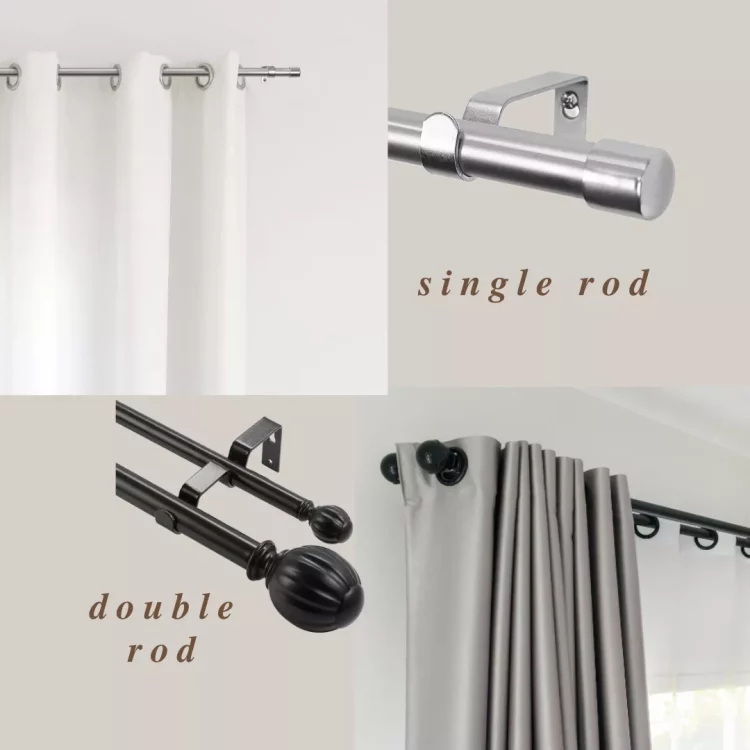
single vs double rods
2 BY MECHANISM — HOW THE CURTAIN MOVES
The mechanism determines the experience of using your curtains every day. Static rods are effortless to install; traverse and motorized rods are effortless to operate.
|
Mechanism — 01 Static Rod The classic. A fixed horizontal bar — you slide the curtain by hand. No moving parts, nothing to maintain. Available in wood, steel, brass, and matte black finishes. BEST FOR Any room. Especially fitting for decorative panels that aren’t opened and closed frequently. |
Mechanism — 02 Traverse Rod A pulley-and-cord system lets you open and close curtains by pulling a wand or string — no touching the fabric. One-way or two-way draw. BEST FOR Formal living rooms, home theaters, and large windows where reaching across to move heavy panels is impractical. |
Mechanism — 03 Motorized Rod An electric motor drives the curtain carrier. Control via remote, wall switch, smartphone app, or voice assistant. Can be programmed to open at sunrise. BEST FOR Smart homes, floor-to-ceiling windows, and anyone with limited mobility. Pairs with Alexa, Google Home, and Apple HomeKit. |
Tip: Traverse and motorized rods use a carrier track rather than rings, so curtains must have sewn pinch-pleat or pencil-pleat headers. Rod-pocket panels won’t work on these systems.
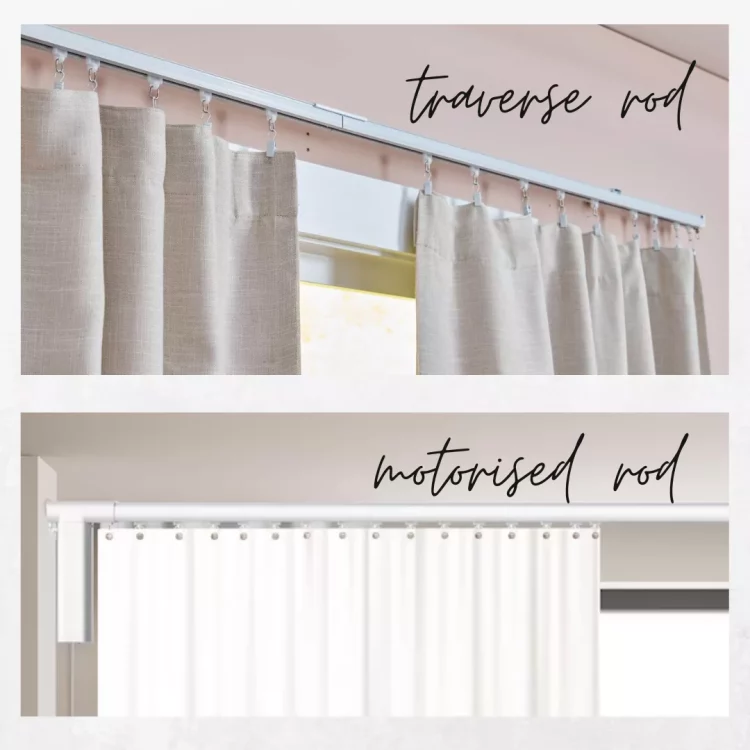
traverse rod & motorised rod
03 SPECIAL TYPES — STRUCTURE & SITUATION
Beyond count and mechanism, some rods are defined by their physical form or the situation they solve.
|
Special — 01 Tension Rod A spring-loaded rod that braces itself between two surfaces — no screws, no wall anchors, no damage. Simple, affordable, and renter-friendly. Holds up to lightweight panels only. BEST FOR Rental apartments, closet openings, café-curtain setups in kitchens, or anywhere you can’t drill. Not suitable for heavy blackout fabric or wide spans over ~60 inches. |
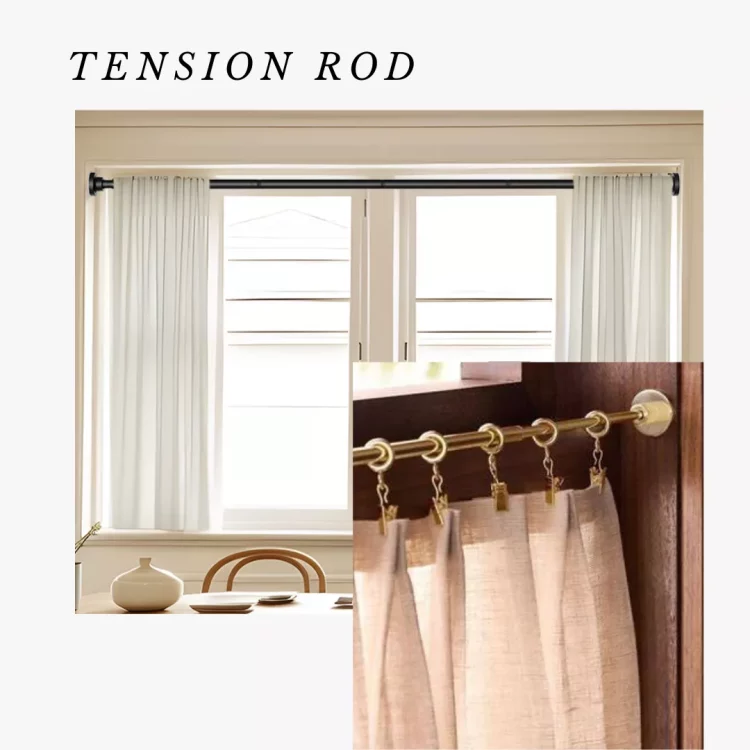
tension rod
|
Special — 02 Curved / Bay Window Rod Designed to follow the geometry of bay windows, bow windows, or alcoves. Comes as flexible rods that bend to any angle, or rigid kits with preset corner connectors. BEST FOR Bay window seating nooks, angled window configurations, and anyone who wants a single continuous treatment across a multi-faceted window. |
Special — 03 Decorative Rod Hardware-as-design-object. The finials (end caps) are the hero — from polished brass spheres to hand-cast iron scrolls. The rod is exposed and becomes part of the room’s composition. BEST FOR Traditional, transitional, and maximalist interiors where the window treatment is a focal point. Pairs beautifully with tab-top, eyelet, or clip-ring panels. |
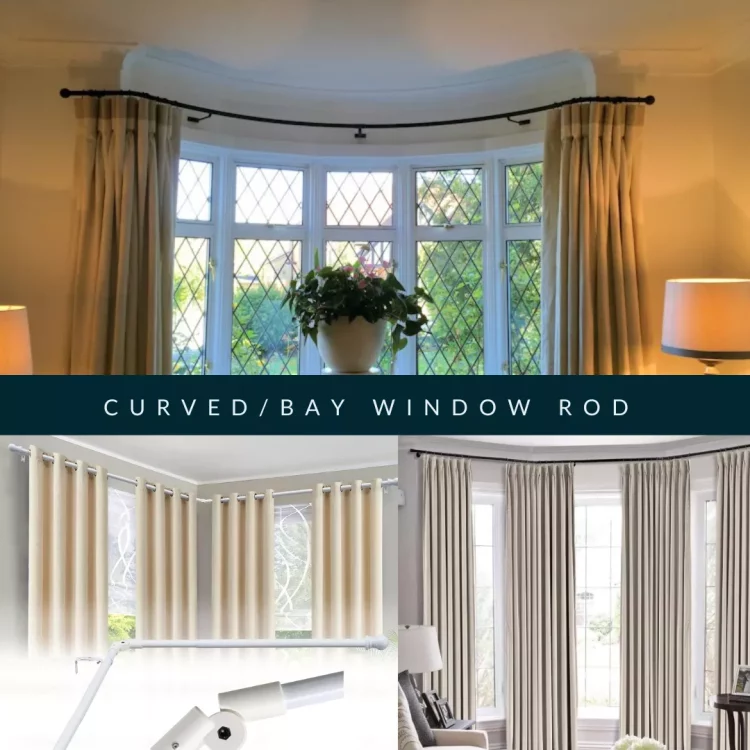
curved/bay window rod
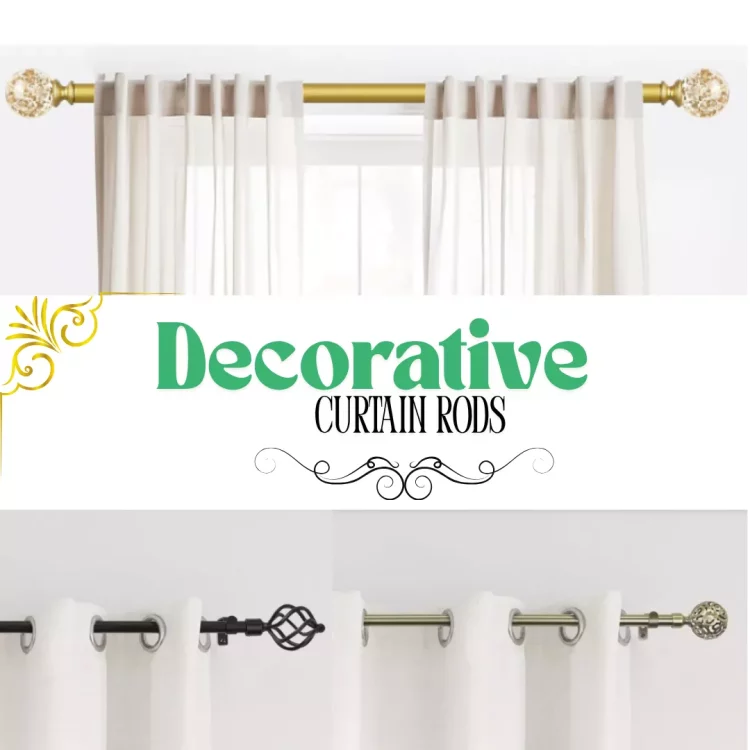
decorative rod
04 APPLICATION BY ROOM
The right rod for a window depends as much on the room’s function as on its aesthetic. Here’s a quick room-by-room guide.
|
Living Room Double Rod or Decorative Traverse Layering sheers with drapes gives daytime ambiance and evening privacy. A traverse rod suits large, frequently-used windows. |
Bedroom Double Rod or Motorized Pair blackout fabric with a sheer for full light control. Motorized rods can open gradually in the morning as a gentle wake-up cue. |
Kitchen Tension Rod (café style) Mount at mid-window height for a classic café-curtain look — privacy at the lower half, natural light flooding in from the top. |
|
Bathroom Tension Rod or Single Static Humidity-resistant materials matter. Choose stainless steel or coated aluminum to prevent rust. Tension rods are popular for sheer privacy panels. |
Bay / Bow Window Curved Bay Rod A flexible bay rod wraps the entire window in one fluid treatment. Pair with floor-length linen for a cozy, architectural look. |
Home Theater / Office Motorized Track Rod Blackout fabric on a motorized track transforms the room at the press of a button. Integrates with lighting scenes — no glare on screens. |
05 INSTALLATION & STYLING TIPS
1. Hang high, hang wide. Mount the rod 4–6 inches above the window frame (or at ceiling height for drama) and extend 8–12 inches beyond the frame on each side. This visually enlarges the window and lets curtains clear the glass completely when open.
2. Match hardware weight to fabric weight. Thin steel rods sag under velvet or heavy blackout fabric. For anything substantial, use a rod rated for the panel weight and add a center support bracket for spans over 60 inches.
3. Finials set the tone. On decorative rods, the finial reads at a glance. Brushed gold reads warm and traditional; matte black reads modern and graphic; crystal reads glamorous. Pick one that harmonizes with your room’s existing metal finishes.
4. The mechanism can be hidden. Ceiling-mounted track systems are nearly invisible — the track sits flush to the ceiling and the curtain appears to float. A strong choice when you want zero hardware on display.
5. Combine dimensions thoughtfully. A double motorized traverse rod is a real product category. Think of count, mechanism, and special form as three independent axes you can mix and match to suit any window and lifestyle.
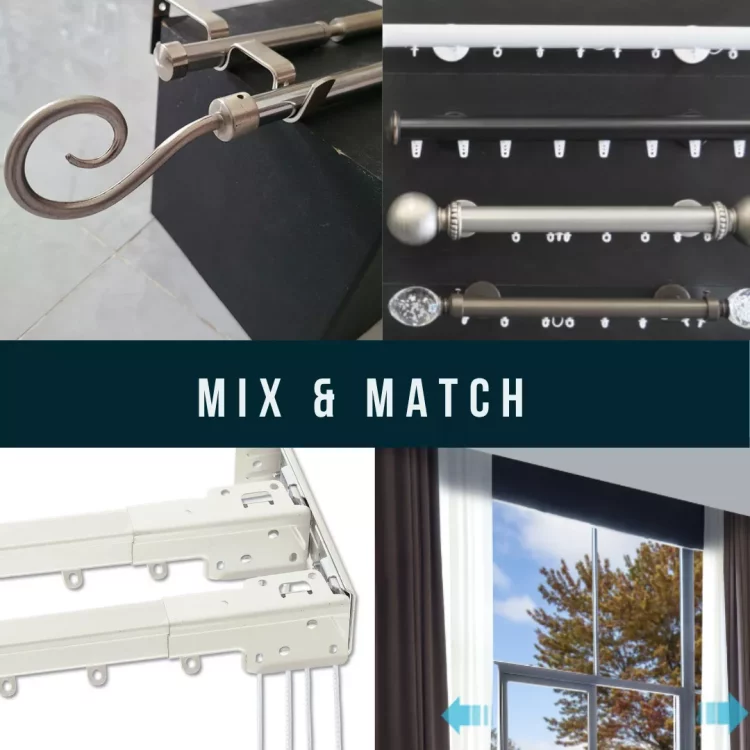
mix & match