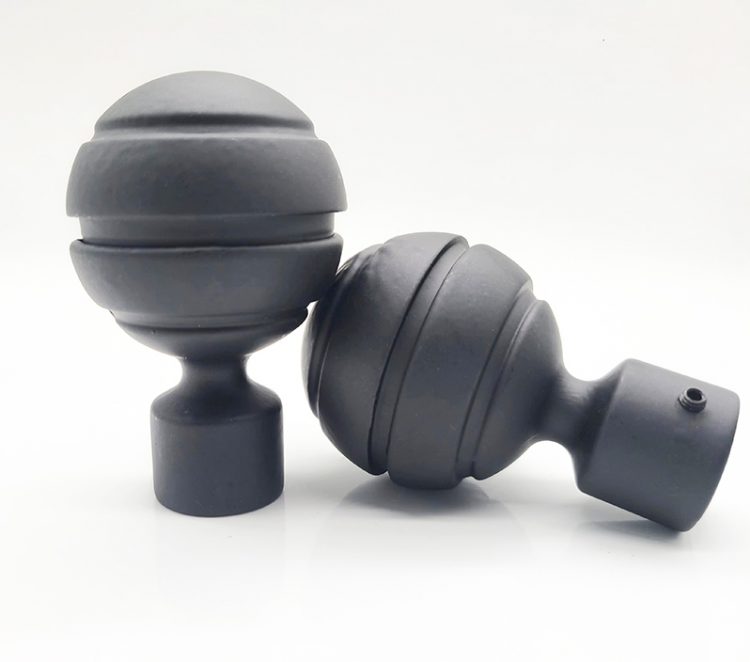
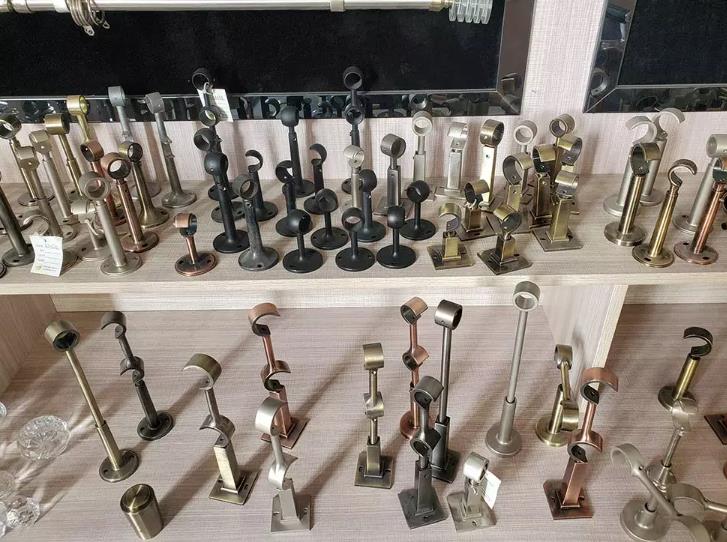
Xmaccent will participate in 134th Carton Fair
2023-10-21
Xmaccent will participate in 134th Carton Fair, welcome to join us on 16.3G33.
Choosing a motor by fabric weight alone is one of the most common — and most costly — mistakes in motorized window covering projects. It's also one of the most common causes of "warranty claims" that aren't actually motor defects at all.
This guide breaks down what actually goes into a proper load calculation, so you can spec correctly the first time, avoid premature failures, and have better technical conversations with your own customers and installers.
Motorized Blinds[/caption]
A motor's rated torque tells you the maximum load it can move under ideal conditions. But "ideal conditions" rarely exist on a real installation. The gap between the spec sheet number and real-world performance is exactly where premature wear, overheating, and early failures come from.
The good news: this gap is predictable and calculable. It just requires looking at four factors instead of one.
This is the number most buyers already calculate:
Fabric weight (kg) = fabric density (g/m²) × width (m) × drop (m) ÷ 1000
Example: A blackout fabric at 400 g/m², 3m wide × 2.5m drop: 0.4 kg/m² × 3m × 2.5m = 3 kg
Straightforward — but this is only the load hanging on the system. It's not the load the motor actually has to move.
The motor isn't just lifting or drawing fabric — it's also turning or moving the hardware attached to it, every single cycle, for years.
For roller systems: the roller tube itself (aluminum tube + end caps + bottom bar + motor housing) adds constant rotating weight. Wider spans need thicker-wall tubes, which weigh more — this is why the same motor can be correctly specified for a 2m window and undersized for a 4m window of identical fabric.
For track-and-carrier systems (curtain tracks, Roman blinds, Shangri-La): each carrier or glider adds incremental weight. On a wide track with many carriers, this adds up — and more importantly, it adds friction (see below).
Rule of thumb: for aluminum roller tubes, add roughly 0.3–0.8 kg per meter of tube length depending on diameter and wall thickness. For track carriers, check your hardware spec sheet for per-carrier weight and multiply by carrier count.
This is the factor that causes the most confusion, because it doesn't show up if you only weigh the fabric and hardware — but it's often the biggest single contributor to real-world load.
Friction comes from:
Practical guideline: add 15–20% of total weight (fabric + hardware) as a friction allowance for straight roller systems. For curved tracks or multi-carrier Roman/Shangri-La systems, increase this to 25–35%.
A motor rated for a given load in a residential setting (2–4 cycles per day) is under very different stress than the same motor in a hotel corridor or commercial space cycling 15–20+ times per day.
Frequent cycling causes fatigue wear — gear and bearing wear that accumulates over repeated cycles, independent of the load itself. This is why two identical motors, same load, can have very different lifespans depending on where they're installed.
Practical guideline: for commercial or high-cycle applications, treat the "safe" load ceiling as 15–20% lower than you would for residential use, even if the rated torque is technically sufficient.
Total effective load = Fabric weight + Hardware weight + Friction allowance
Then apply a safety margin of 20–30% — never spec a motor at its rated maximum. This margin absorbs installation variance, aging hardware, and duty cycle stress over the product's lifespan.
A hotel corridor installation: blackout roller blind, 400 g/m² fabric, 3.5m wide × 2.8m drop, aluminum roller tube, straight track, cycling ~15 times/day.
Motor spec sheets don't rate motors in kilograms — they rate them in torque (N·m, or sometimes kg·cm). Torque describes rotational force, not straight-line weight, so converting your effective load into the right torque number is the step that actually determines which motor SKU you can use.
Torque (N·m) = Load force (N) × Radius (m)
Where load force = effective load (kg) × 9.8 (gravity constant), and radius is the radius of the roller tube (not the diameter — this trips people up).
Using the 8.5 kg effective load from the hotel example above, on a 50mm diameter roller tube (radius = 0.025m):
So the motor needs to be rated at at least 2.08 N·m continuous torque for this load.
This is the counterintuitive part: the same fabric weight needs more torque on a larger-diameter tube, because the radius (lever arm) is longer.
This is why larger/heavier-duty tubes (used for wider spans, as discussed above) aren't just about structural strength — they mechanically require more torque for the exact same fabric load. It's a compounding effect: wider window → heavier tube needed → longer radius → more torque required, on top of the extra fabric weight itself.
same load - different diameter tube[/caption]
Two numbers often appear on motor datasheets, and mixing them up is a common sourcing mistake:
Practical rule: always ask suppliers explicitly which number is on the spec sheet, and size against rated/continuous torque with your safety margin, not stall torque.
The calculation above works in one direction: load → required torque → find a motor that meets it. But there's a second, equally important direction most buyers skip: taking a motor's advertised specs and checking whether they actually hold up for your specific setup.
Reverse formula:
Max load (kg) = Rated torque (N·m) ÷ radius (m) ÷ 9.8
Suppliers often list a single "max load" figure on a datasheet — e.g., "supports up to 10kg." That number is usually calculated against their reference tube diameter, which may not match the tube you're actually using. A wider window with a heavier-duty tube changes the real capacity of the same motor.
Example: A motor rated at 3 N·m, advertised as "10kg max load" — likely calculated against a 30mm tube:
3 N·m ÷ 0.015m ÷ 9.8 = 20.4 kg (too generous — suggests the figure was rounded from stall torque, not rated torque)
The same motor on a 50mm tube:
3 N·m ÷ 0.025m ÷ 9.8 = 12.2 kg
On a 63mm heavy-duty tube:
3 N·m ÷ 0.0315m ÷ 9.8 = 9.7 kg
The motor itself didn't change — but its real capacity for your project moved by 50%+ depending on tube diameter. This is why a "max load" figure on a datasheet is close to meaningless without knowing what tube diameter it was calculated against.
When evaluating a motor against your project, ask the supplier for three numbers, then run the math yourself rather than trusting the headline "max load" claim:
Then compare:
If a supplier can't separate rated torque from stall torque, or can't tell you the reference tube diameter behind their max load claim, that's a signal the spec sheet is marketing copy rather than engineering data.
Two motors can carry identical specs on a datasheet and perform completely differently once hardware weight, friction, and duty cycle are factored in. Suppliers who only publish fabric load capacity are giving you half the picture.
When evaluating a motor supplier, ask:
A five-minute conversation at the sourcing stage is a lot cheaper than a warranty claim six months into a project.
2023-10-21
Xmaccent will participate in 134th Carton Fair, welcome to join us on 16.3G33.
2023-09-28
The video shows curtain rod bracket painting line of Xmaccent.
2022-10-19
Welcome to the Xmaccent live broadcast website of the 127th Canton Fair Online Exhibition
2022-09-23
In September 2022, we held a two day and one night group activity
2022-08-25
Here are some different style matte black curtain rod bracket we manufactured these days.
2022-08-24
Here are some different style matte black curtain rod finial we produced these days.
2022-08-17
The video shows the curtain rod& accessories (curtain rod bracket, curtain rod finial, curtain ring) painting line of our factory
2022-06-02
The video show the production of curtain rod accessories and warehouse in Xmaccent factory
2022-05-27
Xmaccent manufactures different shape and color rod diameter 20mm curtain rod with finial and bracket.The following pictures are only part of them,we have painting and electroplating color,metal、zink ...
2022-05-26
Xmaccent Produce different color and shape rod diameter 16mm curtain rod with finial and bracket.The following pictures are only part of them,we have painting and electroplating color,metal and alumin...
2022-04-15
Over the years, we have made many styles of spherical curtain rod decorative heads, and the video is only part of it.
2022-04-14
See you at the 131st Canton Fair online Apr.15-24,2022